
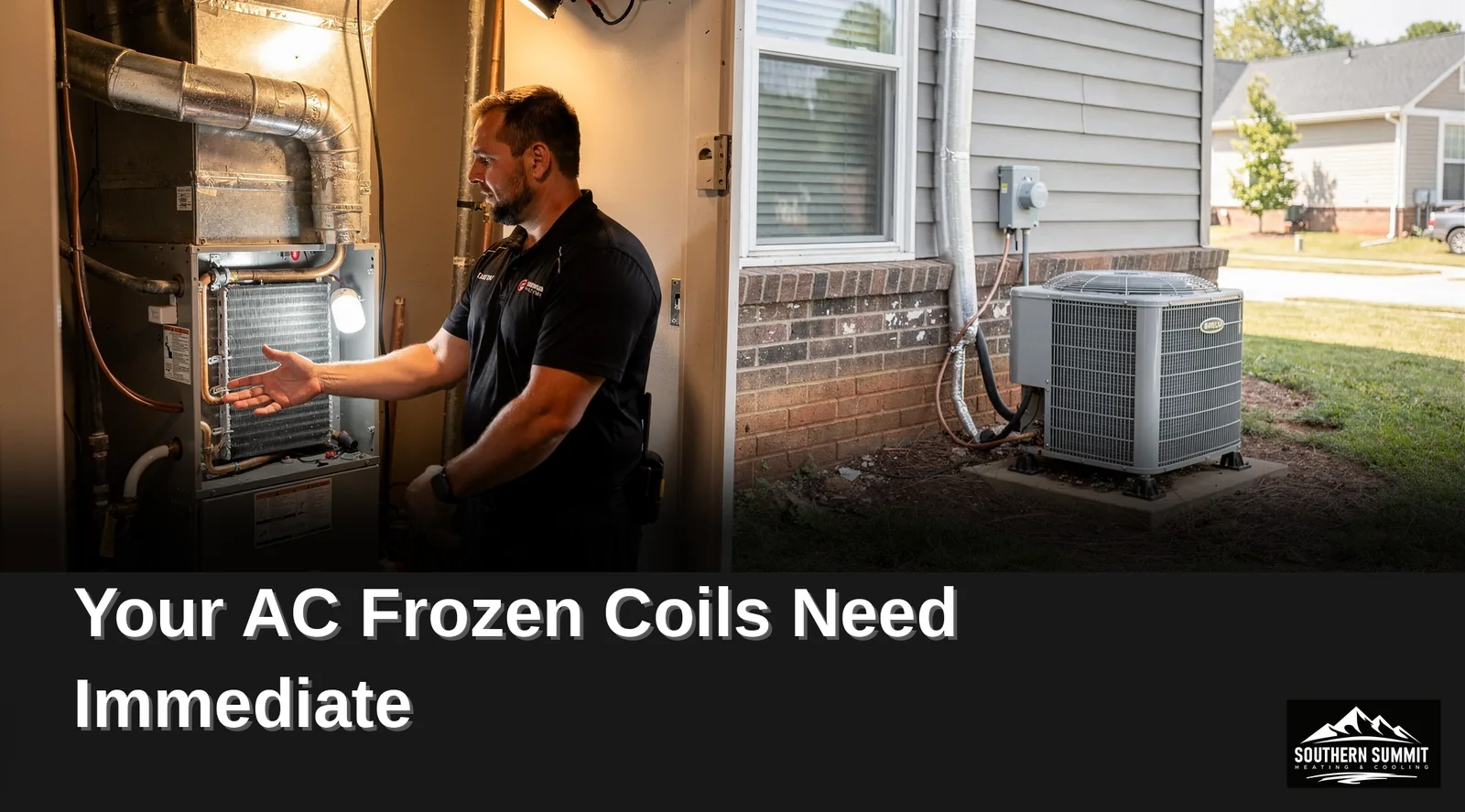
Frozen evaporator coils usually stem from restricted airflow, a dirty filter, or low refrigerant, all of which stop proper heat exchange and let condensation ice over on the coil. We prevent this across Burke, Catawba, Caldwell, McDowell, and Rutherford counties through regular filter changes, airflow checks, and refrigerant inspections before summer cooling season begins.
What Should You Know Before Thawing Frozen Coils?
Frozen coils form when the refrigeration cycle inside an air conditioner or heat pump breaks down. Southern Summit treats every frozen coil call as a full system check, not just a quick thaw, since ice buildup usually points to a deeper problem. Refrigerant, two coils, and several other components work together during that cycle to cool a home, and when one piece falls out of balance, the whole system suffers. The evaporator coil sits indoors, tucked inside the furnace or air handler, while the condenser coil lives outside near the house. Ice shows up on the indoor coil first, since that’s the one pulling heat and moisture out of the air.
Good ac freeze prevention habits start the moment ice appears, not after the whole coil is coated. Before switching off the system and waiting for the ice to melt, we walk homeowners through a few steps that keep the process safe and productive:
- Shut off the cooling system at the thermostat to stop the compressor from running.
- Set the fan to “on” so air keeps moving across the coil and speeds up the melt.
- Check the air filter for buildup, since restricted airflow is a common freeze trigger.
- Watch for water pooling near the indoor unit and set towels or a pan underneath.
- Call a licensed technician once the ice clears to find out what caused it.
Why does the coil freeze in the first place?
Coils freeze when airflow drops too low or refrigerant runs short, throwing off the temperature balance the cycle depends on. Weak airflow and low refrigerant signs often show up together, since a struggling system overworks itself trying to compensate.
Southern Summit repairs, replaces, and maintains AC systems of any brand, whether we installed the unit or not. Our owners built this company on showing up when promised and treating every property like our own.
How Do You Check For Low Refrigerant?
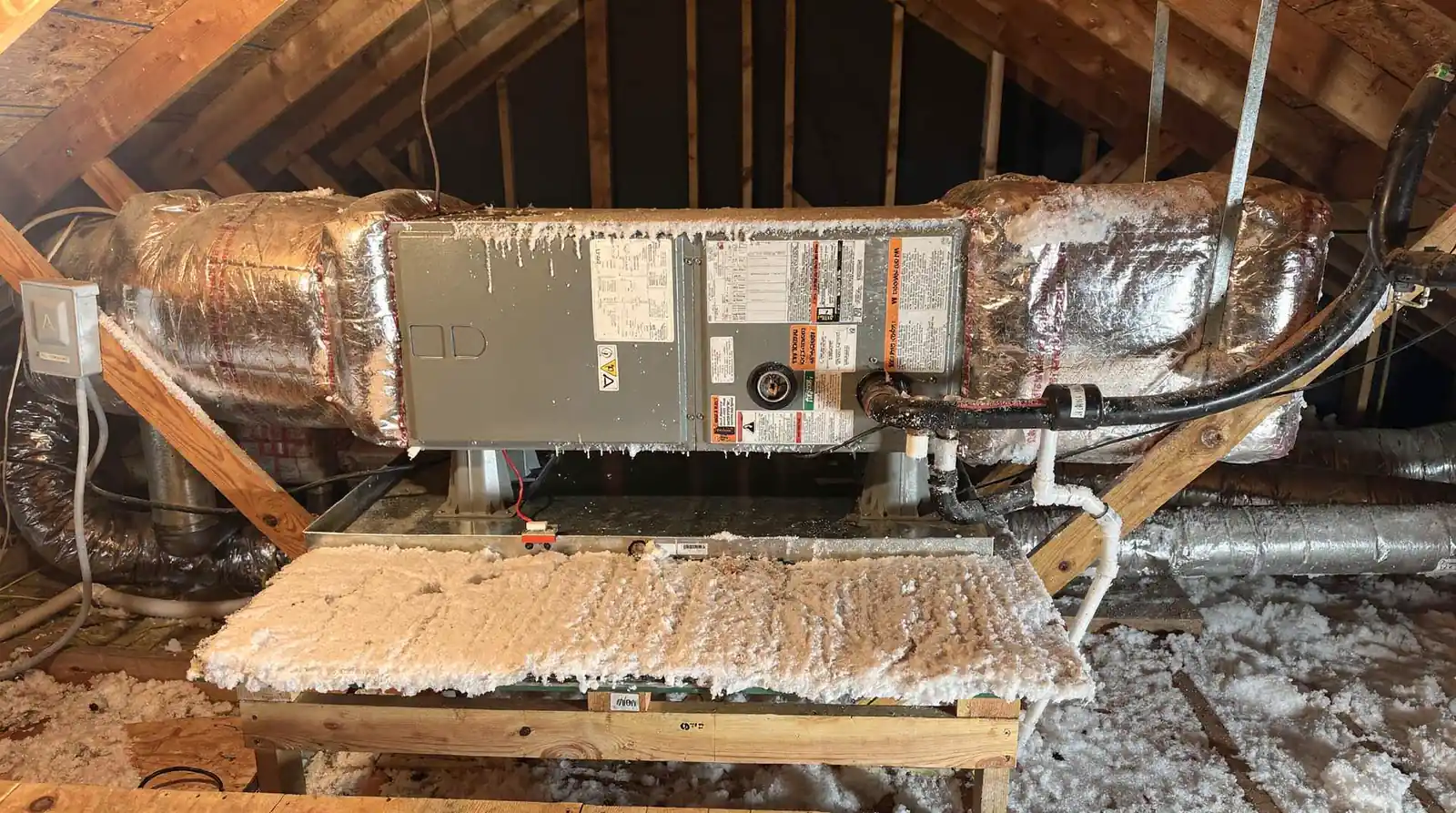
A warm house paired with ice on the indoor coil points straight to refrigerant trouble. Low refrigerant signs rarely show up alone. Weak airflow, a system that runs constantly, and frozen coils on the evaporator often arrive together. We walk homeowners through a simple check before we even schedule a visit.
- Feel the air at the vents. Warm or barely-cool air blowing out, especially after the system has run for a while, signals a refrigerant problem worth investigating.
- Look at both units. Frozen coils show up on the indoor evaporator or the outdoor condenser, though icing happens more often on the indoor coil during cooling season.
- Check for moisture buildup. Ice forms when humidity in the air condenses and freezes on the coil surface, usually tied to an airflow or refrigerant imbalance somewhere in the system.
- Track how long the house takes to cool. A steady climb in indoor temperature, even with the system running nonstop, is a classic symptom we hear about constantly.
- Call or text us with what you’re seeing. Describe what the system is doing, and we can often tell homeowners what’s wrong before a truck ever leaves the shop.
What should I do if I already see ice on the coil?
Shut the system off and switch the fan to “on” so it can thaw completely; running it while frozen only makes things worse. Once it’s thawed, call or text us. We get straight answers back fast, especially when the house is climbing in temperature and comfort can’t wait.
What Other Causes Block Normal Airflow?
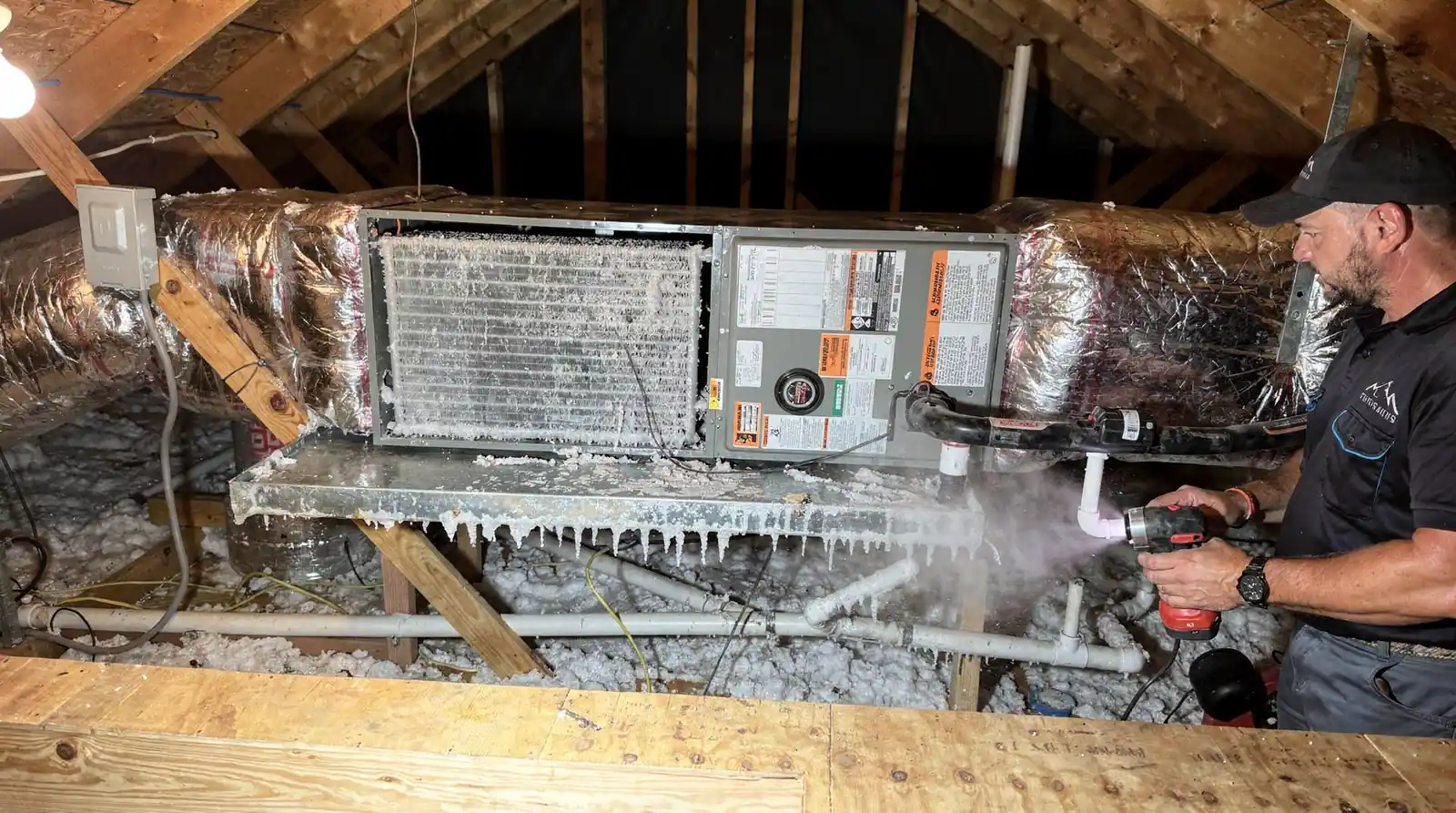
Airflow restrictions rank among the top reasons behind frozen coils, and the blockage rarely sits on the coil itself. A clogged filter, a struggling blower, or crushed ductwork can all starve the coil of the warm air it needs to stay ice-free. Unlike most HVAC problems, a frozen coil can trace back to almost any part of the system working together.
What blocks airflow to the evaporator coil?
Several common culprits choke off air movement before it ever reaches the coil:
- A clogged or overdue air filter
- A dirty, slow-turning blower wheel
- Closed or furniture-blocked supply vents
- Collapsed, leaky, or undersized ductwork
- A blocked return air grille
Any single item on that list forces coil temperatures low enough for moisture to freeze solid.
How do we track down an airflow-related freeze?
Weak cooling is usually the first thing homeowners notice. The coil sits hidden inside the indoor unit long before frost becomes visible. Before touching anything, shut the system off and let the coil thaw completely. Once it’s clear, we work through the system in order:
- Pull and inspect the air filter for buildup.
- Check the blower wheel for dust and debris.
- Walk the home and open any closed vents.
- Look for pinched, disconnected, or damaged duct runs.
- Confirm the return grille isn’t blocked by furniture or rugs.
Airflow problems get confused with refrigerant trouble often. The fixes and low refrigerant signs look nothing alike, so a proper diagnosis matters. We do every job like it’s our own system. As a licensed North Carolina contractor, we bring that same standard to every airflow diagnosis across Hickory and the surrounding foothills. Good filter habits and clear vents go a long way toward solid ac freeze prevention all season.
How Do You Thaw And Prevent Refreezing?
Thawing frozen coils starts with a simple rule: stop running the air conditioner and let the ice melt on its own terms. The refrigeration cycle balances airflow, refrigerant, and temperature so precisely that a small imbalance often triggers the freeze in the first place. Forcing the system to keep cooling while ice builds only pushes moisture where it shouldn’t go and strains the compressor.
Before starting the thaw, switch the thermostat off and set the fan to run so air keeps moving across the coil without adding more cold refrigerant. Once the system sits idle, work through these steps in order:
- Turn the thermostat to off and switch the fan setting to on.
- Place towels or a shallow pan under the indoor unit to catch runoff.
- Let the coil sit for several hours, or overnight for a heavy freeze.
- Check the air filter and swap it out if it’s dirty, since restricted airflow is a common trigger.
- Restart the system once all visible ice is gone, then watch for refreezing over the next day.
Restart with a plan, not a guess. Real ac freeze prevention means catching small issues — a clogged filter, closed vents, a refrigerant leak — before they cause a repeat freeze. We look at each home’s actual budget. Shape our recommendations around what makes sense for that homeowner, rather than pushing one fix for everyone.
What if the coil freezes again after thawing?
Repeat freezing usually points to something mechanical, not bad luck. Weak airflow, a failing blower motor, or low refrigerant signs like hissing sounds and warm air from the vents deserve a technician’s look.
Does a new system protect against future freezes?
A properly sized, correctly installed system freezes far less often. Every installation we complete carries a one-year labor and ten-year parts warranty, real protection if a recurring freeze traces back to the equipment itself.
When Should You Call A Pro Instead?
Certain frozen coil situations call for a licensed technician, not another round of DIY troubleshooting. Ice that returns within a day of thawing, hissing near the refrigerant lines, or warm air blowing from vents all point to problems beyond a dirty filter. Building good ac freeze prevention habits starts with recognizing which signs mean a homeowner should stop tinkering and pick up the phone. Southern Summit Heating & Cooling, a veteran-owned company based in Hickory, North Carolina, serves homeowners across Burke, Catawba, McDowell, Caldwell, and Rutherford counties, with Hickory, Morganton, Lenoir, and Marion as priority towns.
Spotting the line between a simple fix and a serious repair keeps a frozen system from turning into a costly breakdown. Homeowners can work through this checklist before deciding whether to call for help:
- Shut the system off and allow the frozen coils to thaw completely before restarting.
- Watch for ice returning within 24-48 hours after the restart — a sign the underlying cause never got fixed.
- Feel for warm or weak airflow at the vents, which often pairs with low refrigerant signs like hissing or bubbling near the lines.
- Track repeat freeze-ups even after changing filters and clearing vents, since that pattern usually points to a mechanical or electrical fault a filter change can’t solve.
How fast can Southern Summit respond to a frozen AC?
Southern Summit gets straight answers to homeowners fast once a call or text comes in. Quick response matters when a frozen system leaves a home without cooling during a North Carolina summer.
Reputation counts for a lot in these moments. Southern Summit has earned dozens of five-star Google reviews in its first year, built by owners Neal Lowman and Hunter McSwain around honest, no-pressure recommendations. That track record matters most when deciding whether a frozen coil needs a quick refrigerant fix or signals a system nearing the end of its life.
FAQ
What causes frozen evaporator coils?
Restricted airflow, a dirty filter, or low refrigerant stop proper heat exchange and let condensation ice over on the coil. These issues often arrive together, since a struggling system overworks itself trying to compensate.
How do you safely thaw a frozen coil?
Shut off the cooling system at the thermostat, set the fan to “on” to speed up melting, and check the filter for buildup. Watch for pooling water and call a licensed technician once the ice clears.
How does Southern Summit prevent frozen coils?
Southern Summit performs regular filter changes, airflow checks, and refrigerant inspections before summer cooling season across Burke, Catawba, Caldwell, McDowell, and Rutherford counties. Every frozen coil call gets treated as a full system check, not just a quick thaw.
Conclusion
In closing, frozen AC coils don’t have to derail your comfort—they’re preventable with regular maintenance and attention to airflow. Catching the warning signs early keeps your system running smoothly and saves you from costly repairs down the road. If you’re dealing with frozen coils or want to stay ahead of the problem, call or text Southern Summit at (828) 308-0928 and tell us what your system is doing.
Need a hand with your system?
Southern Summit Heating & Cooling is a veteran-owned, licensed heating and cooling company (NC License #33148) based in Hickory, serving Burke, Catawba, Caldwell, McDowell and Rutherford counties. Estimates are free and you get one of us on the phone — not a call center.
Call or Text (828) 308-0928