

Clogged condensate drain lines cause AC water leaks and unexpected shutoffs, especially during Hickory’s humid summers. We shut off the unit first, then flush the line with a wet/dry vacuum at the outdoor exit, then pour distilled vinegar into the indoor access point to break up algae and buildup. If clogs persist, we send out a technician from our North Carolina licensed company (NC #33148).
What Do You Need Before You Start?
Three things make this job go smoothly: a powered-down unit, a wet/dry shop vacuum, and clear access to both ends of the drain line. Skipping any one of these steps risks a shock hazard, a flooded utility closet, or a clog that never actually clears. Southern Summit HVAC serves homeowners across Hickory and the surrounding Burke, Catawba, McDowell, Caldwell, and Rutherford county foothills as a veteran-owned, residential-only company, so local help sits close by if a simple cleaning turns into something bigger.
Safety comes first, before any tool touches the pipe. Switching off the air conditioning unit at the thermostat and breaker keeps the job safe. Water and electricity don’t mix, and a running system keeps pushing condensation into a line that’s already backed up.
What tools do I actually need for this job?
A wet/dry shop vacuum handles most clogs without chemicals or a plumber. The condensate drain carries water from a pan under the evaporator coil through a PVC pipe, sometimes routing through a pump before reaching the outdoors, so a vacuum hose sized for PVC works best.
Before you start, get set up:
- Locate the indoor access point near the air handler.
- Find the outdoor drain line exit.
- Grab a wet/dry shop vacuum with a narrow hose attachment.
- Keep towels nearby to catch spills and guard against water leaks.
Good drain clog prevention starts with having the right setup on hand instead of scrambling mid-project. If a clog keeps returning after cleaning, our licensed, warranty-backed team is worth a call before the problem grows into a bigger repair.
How Do You Locate The Drain Line?
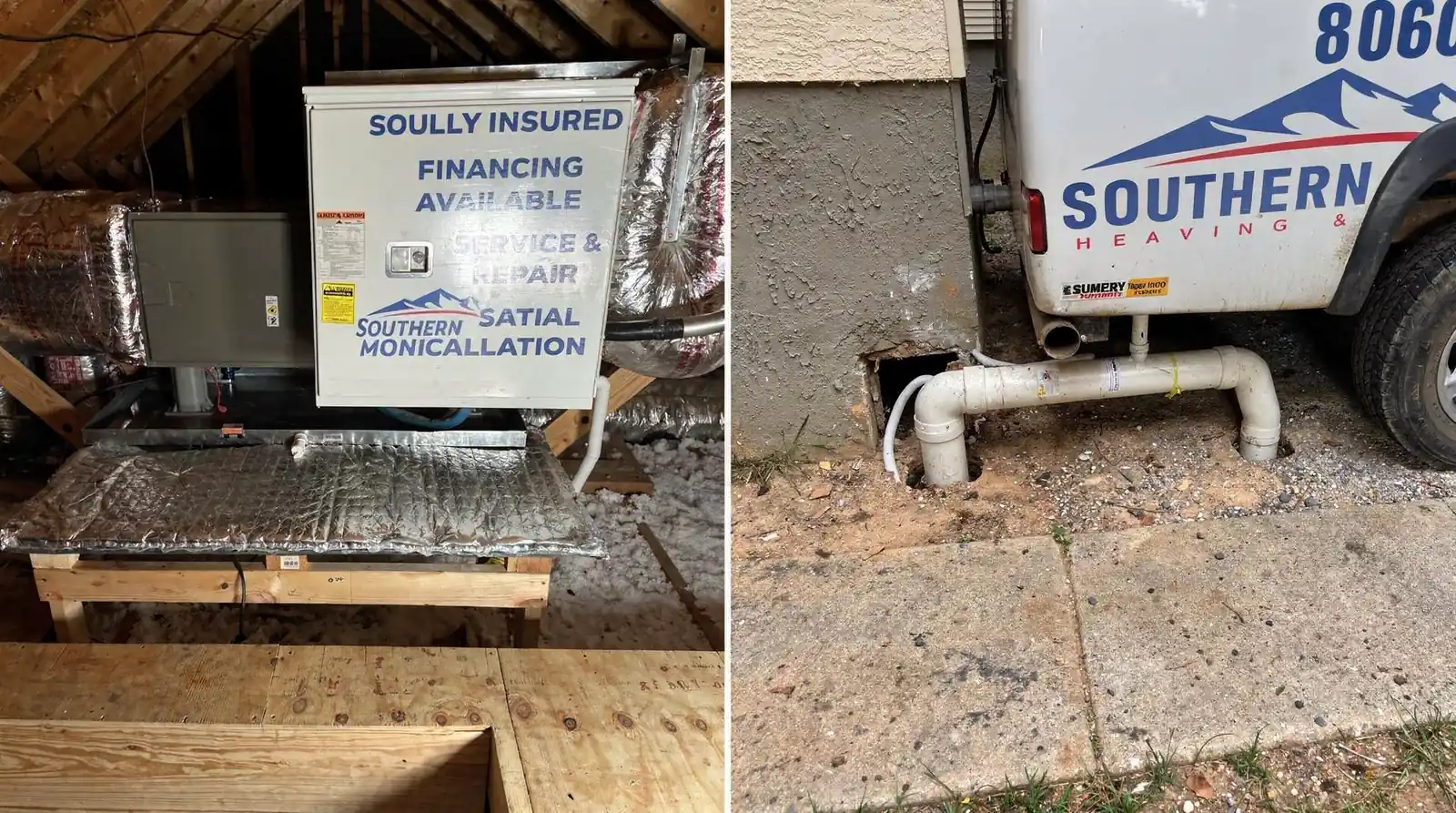
Two spots matter most: the access point near the indoor air handler and the exit point outside the home. Finding both ends first turns a confusing search into a quick one, and it sets up the rest of the cleaning job to go smoothly.
The indoor access point usually sits close to the air handler or furnace, often marked by a capped PVC pipe sticking up in a T-shape. That cap is where a wet/dry vacuum or a flush later on will do its work. The outdoor exit point is typically a plain pipe near the foundation, close to where the outdoor unit sits, and it’s often the first place a condensate drain clog shows itself through dripping or a musty puddle.
What if I can’t find the drain line at all?
Not every home follows the same layout, especially older ones that have had ductwork reworked over the years. Southern Summit handles repair and maintenance on every brand, whether we installed the system or not, so a homeowner working with an older or previously serviced unit isn’t stuck.
Who do I call if I’m still not sure what’s wrong?
We built Southern Summit on giving straight answers, not upsells, and we treat every home like our own. If pinpointing the trouble spot feels overwhelming, call or text us and describe what the system is doing. That’s usually enough for us to point toward the fix.
Here’s a quick way to narrow it down:
- Check near the air handler for a capped vertical pipe (indoor access point).
- Walk the exterior wall near the outdoor unit for a draining pipe (exit point).
- Look for standing water or staining, both signs of water leaks tied to a blocked line.
Regular checks like these support long-term drain clog prevention and help you avoid a surprise shutoff on a hot afternoon.
How Do You Clear The Clog Yourself?
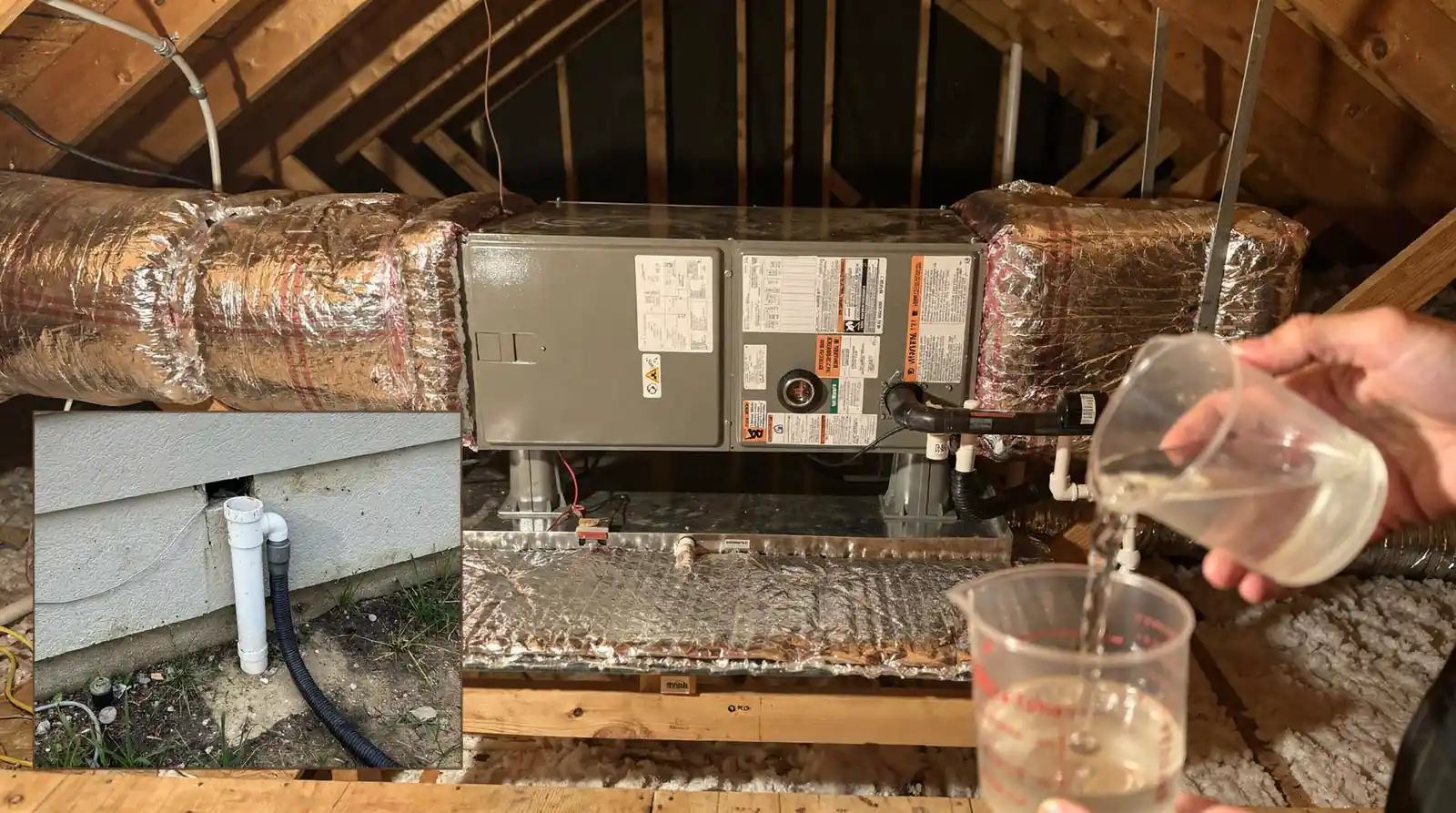
A shop vacuum and a cup of distilled vinegar clear most condensate drain clogs without a service call. Left alone, a blocked line backs up fast, and that backup turns into water leaks across a closet floor or a stained ceiling below the air handler. Before touching anything, switch the air conditioner off at the thermostat or the breaker — working on a live system risks a shock and makes the mess worse.
- Shut the system down completely at the thermostat or breaker.
- Locate the indoor access point, usually a capped T-fitting near the air handler or furnace.
- Find the outdoor drain line exit, typically a PVC pipe near the foundation.
- Fit a wet/dry vacuum over the outdoor exit and run it for a minute or two to pull the clog loose.
- Pour a cup of distilled vinegar into the indoor access point to break down any softer buildup the vacuum leaves behind.
We service Goodman, Ruud, and Bosch systems, plus every other brand we run into, and these same clearing steps hold up no matter what’s sitting in the closet or the attic.
What if the vacuum and vinegar don’t fix it?
If water still pools near the unit after both steps, the clog probably sits deeper in the line or a low spot is holding standing water. Give us a call or a text at that point. You get a straight answer back fast, instead of letting the problem sit and grow.
Most homeowners skip the condensate drain when they think about AC upkeep. It’s one of the most overlooked spots in the whole system. Solid drain clog prevention now is far easier than dealing with the water damage that follows a summer left unchecked.
How Can You Prevent Future Clogs?
Regular flushing and a seasonal maintenance visit stop most drain backups before they start. Dirt, dust, mold, and algae build up inside the condensate drain over time, and that buildup is the main reason lines back up and overflow into ceilings, floors, or the air handler.
We treat drain clog prevention as routine upkeep, not a reaction to a puddle on the floor. Staying ahead of buildup protects both the AC system and the home itself, rather than waiting for a leak to show up somewhere it shouldn’t. Here’s the sequence we walk homeowners through:
- Check the drain pan and access point monthly during cooling season for standing water or sluggish drainage.
- Flush the line before algae and mold get a foothold — don’t wait for a slow drip to turn into a backup.
- Watch for a musty smell near the indoor unit; it often shows up before any visible water does.
- Book a seasonal check with our team. We service every brand, whether we installed the system or not.
What happens if the drain line clogs anyway?
A clogged line trips the system’s built-in safety switch, and that shuts the air conditioning off completely. On a hot July afternoon, that means the house starts climbing in temperature fast, right when everyone needs relief the most.
Can a clogged drain line cause real water damage?
Yes, and it happens quicker than most homeowners expect. Left unchecked, water leaks from an overflowing drain pan soak into ceilings, subfloors, and drywall. Catching the clog early, through a quick seasonal visit, keeps that damage from happening at all.
When Should You Call A Pro?
Standing water near the indoor unit means the clog has already won. At that point, hoping for the best wastes precious time while water spreads across floors, drywall, and ceilings. We recommend reaching out at the very first sign of trouble with the condensate drain, not after a puddle shows up.
How Do I Know If The Problem Is Bigger Than A DIY Fix?
If a wet/dry vacuum or vinegar flush doesn’t clear the line within a few minutes, something else is going on — a crushed pipe, a buried clog, or a pan that’s already overflowing. We built our reputation in Hickory and the surrounding foothills on giving homeowners an honest read on situations like these, not a sales pitch. Treating every home like our own means we’ll tell you plainly when a simple flush will do and when it won’t.
What Happens When I Call Southern Summit?
A quick call or text usually gets you a straight answer fast. That speed matters when water leaks are already threatening flooring or ceiling drywall below the unit. Here’s generally what to expect:
- Describe what you’re seeing — standing water, a musty smell, or an AC that shut itself off.
- We walk you through what’s likely happening and whether it’s safe to wait.
- We schedule a visit to clear the clog and check for damage.
We’re licensed in North Carolina and back our installation work with a one-year labor warranty and a ten-year parts warranty. Drain clog prevention and any needed repairs come with real accountability behind them.
Call or text us at (828) 308-0928 and we’ll take it from there.
FAQ
What household items clear a clogged AC condensate drain line?
A wet/dry shop vacuum and distilled vinegar clear most clogs. The vacuum pulls buildup out through the outdoor exit. Vinegar poured into the indoor access point breaks down algae inside the line.
When should a homeowner call a professional instead of cleaning the line themselves?
Persistent clogs that don’t clear after vacuuming and vinegar treatment call for a licensed technician. Southern Summit HVAC is licensed in North Carolina (NC #33148) and can diagnose and fix stubborn blockages.
Does Southern Summit HVAC only service systems they installed?
No, Southern Summit handles repair and maintenance on every brand, including Goodman, Ruud, and Bosch, regardless of who installed the system originally. This covers older homes with reworked ductwork too.
Conclusion
Keeping your AC condensate drain line clean is one of those simple maintenance tasks that protects your home. A little preventive care now helps you avoid water damage and mold headaches later. Call or text us at (828) 308-0928 and tell us what your system is doing.
Need a hand with your system?
Southern Summit Heating & Cooling is a veteran-owned, licensed heating and cooling company (NC License #33148) based in Hickory, serving Burke, Catawba, Caldwell, McDowell and Rutherford counties. Estimates are free and you get one of us on the phone — not a call center.
Call or Text (828) 308-0928