
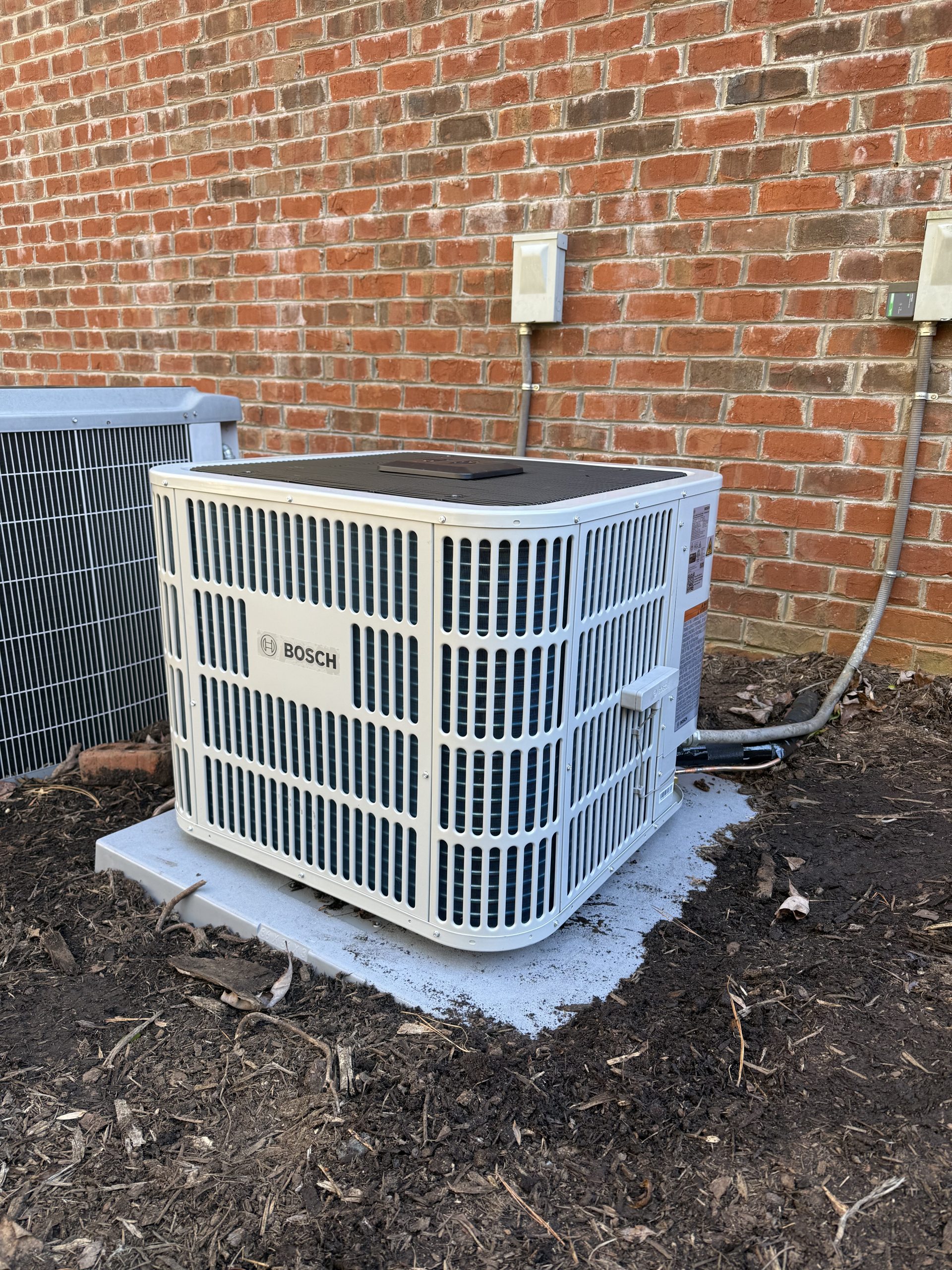
Every winter, usually on the first really cold, damp morning, we get a version of the same call: ‘My heat pump is steaming — I think it’s on fire.’ Or: ‘The vents are blowing cold air and there’s a sheet of ice on the outdoor unit. It’s broken, right?’
Most of the time, it isn’t. What those homeowners are seeing is defrost mode — a normal, built-in function that every heat pump performs in cold weather. But defrost mode looks alarming if nobody ever explained it to you, and there’s a version of it that really is a problem. This article covers both: what normal defrost looks like, and the signs that your heat pump has crossed from routine defrosting into an actual ice problem that needs attention. If you’re looking at your outdoor unit right now and you’re not sure which one you’ve got, call or text us at (828) 308-0928 and we’ll help you sort it out.
Why heat pumps frost up in the first place
A heat pump heats your home by pulling heat out of the outdoor air — even cold air has heat energy in it — and moving it inside. To do that, the outdoor coil runs colder than the air around it. On a cold, humid day, moisture in the air hits that cold coil and freezes to it, the same way frost forms on a car windshield overnight.
A thin coating of frost on the outdoor unit in winter is completely normal. The unit expects it. That’s exactly why defrost mode exists.
What defrost mode does, and what it looks like
When the system detects frost building on the coil, it briefly runs in reverse — essentially switching to cooling mode — so the outdoor coil gets hot and melts the frost off. The whole thing typically lasts a few minutes, and while it’s happening you may notice:
- Steam or vapor rising off the outdoor unit. That’s frost hitting a hot coil and flashing into water vapor. It can look like smoke. It isn’t.
- The outdoor fan stops while the compressor keeps running. The unit sounds different — often louder, sometimes with a whooshing or swooshing sound as the refrigerant reverses direction.
- Cooler air from your vents for a few minutes. Because the system is briefly running in reverse, it isn’t delivering its usual heat. Many systems run backup heat during defrost to cover the gap, but the air can still feel cooler than normal.
- Water around the base of the unit afterward, or refrozen puddles on cold ground. That’s the melted frost draining off.
Then the unit switches back, the fan restarts, and heating resumes as if nothing happened. If that’s what you’re seeing — occasional, short, self-resolving — your heat pump is doing its job. You don’t need to call anyone, and we’d rather tell you that than sell you a service visit you don’t need.
What’s not normal: the signs of a real problem
Defrost mode is routine. These five things are not:
1. Ice that never goes away
Frost that melts off and comes back is normal. A unit that stays caked in ice for hours or days — or builds visible thickness, like a glaze you could knock off with your hand — means defrost isn’t keeping up or isn’t engaging at all. Causes range from a failed defrost sensor or control board to low refrigerant, and none of them fix themselves.
2. Ice on top of the unit, or sheet ice encasing it
Coil frost forms on the sides, in the fin area. Ice on top of the cabinet usually came from above — a dripping gutter, melting roof snow, a downspout aimed at the unit. That ice can jam the fan blades and bend them. If water from your roofline is landing on your heat pump, fixing the drainage matters as much as clearing the ice.
3. Defrost running constantly
If you’re hearing the reversing whoosh every few minutes, or the unit seems to spend more time steaming than heating, the defrost system itself is likely faulty. Constant defrosting also means constant backup heat, which shows up on your power bill fast.
4. Cold air that never warms back up
Cool air for a few minutes during defrost is expected. Lukewarm or cold air all the time is a different complaint entirely — we wrote a full walkthrough in Heat Pump Not Heating? A Homeowner’s Troubleshooting Guide.
5. Grinding, clattering, or a fan that won’t spin
If ice has reached the fan, or the fan is hitting ice when it tries to start, shut the unit off. A bent fan blade turns a weather problem into a mechanical repair.
What you can safely do yourself
If your heat pump is iced beyond a normal frost coating, here’s what’s safe to do today:
- Check the filter and the airflow indoors. Poor airflow makes everything about a heat pump work worse, including defrost. A clean filter is the cheapest fix in HVAC.
- Clear debris from around the unit. Leaves, grass, and shrubs crowding the cabinet restrict the airflow the coil needs. This time of year in western North Carolina, fallen leaves pile against outdoor units fast. Keep a couple of feet clear on all sides.
- Look up. Is anything dripping onto the unit? A gutter fix might be the whole repair.
- Let defrost do its work. If the unit is actively steaming, that’s the system solving the problem. Give it time.
And two things not to do: don’t chip or pry ice off the coil — the aluminum fins bend easily, and straightening damaged fins is a bigger job than the ice ever was — and don’t pour hot water on a frozen unit in freezing weather, where it refreezes into a worse problem than you started with.
The honest part: when ice means a bigger conversation
Here’s the truth most homeowners don’t get told: chronic icing on an otherwise healthy heat pump is unusual. When we see a unit that ices up repeatedly, the underlying cause is often something measurable — low refrigerant from a slow leak, a failing sensor, a control problem. Those are real repairs, but they’re specific, diagnosable ones. A technician who looks at a chronically icing unit and says ‘they just do that in winter’ hasn’t finished the job.
On the flip side, if your system is newer and iced up once during a freak ice storm — that’s weather, not equipment. One bad morning doesn’t mean your heat pump is failing, and nobody should talk you into a repair based on a single event. Our approach is to find what’s actually wrong, tell you plainly, and give you a recommendation that fits your situation and your budget.
Keeping defrost drama to a minimum this winter
A heat pump heading into a western North Carolina winter in good shape — clean coil, correct refrigerant charge, sensors verified — defrosts less often and recovers faster. That’s the case for a seasonal checkup before the cold settles in, something we covered in Getting Your Heat Pump Ready for Winter. And if your home has both a heat pump and a gas furnace working together, defrost behaves a little differently again — the furnace carries the load while the heat pump recovers — which is part of why dual-fuel systems work so well in our climate.
Steaming, iced over, or just not sure?
Southern Summit HVAC is a veteran-owned heating and cooling company based in the Hickory area, serving homeowners across Burke, Catawba, Caldwell, McDowell, and Rutherford counties — Hickory, Morganton, Lenoir, Marion, and the communities around them. We install and service heat pumps of every brand, and we’re glad to tell you over the phone whether what you’re seeing is normal defrost or something that needs eyes on it.
Call or text (828) 308-0928, or request service online. Southern Summit Heating & Cooling LLC is a licensed North Carolina HVAC contractor, license #33148.
Need a hand with your system?
Southern Summit Heating & Cooling is a veteran-owned, licensed heating and cooling company (NC License #33148) based in Hickory, serving Burke, Catawba, Caldwell, McDowell and Rutherford counties. Estimates are free and you get one of us on the phone — not a call center.
Call or Text (828) 308-0928